
Gulistan Korban – Ankara / Istanbul / Diyarbakir
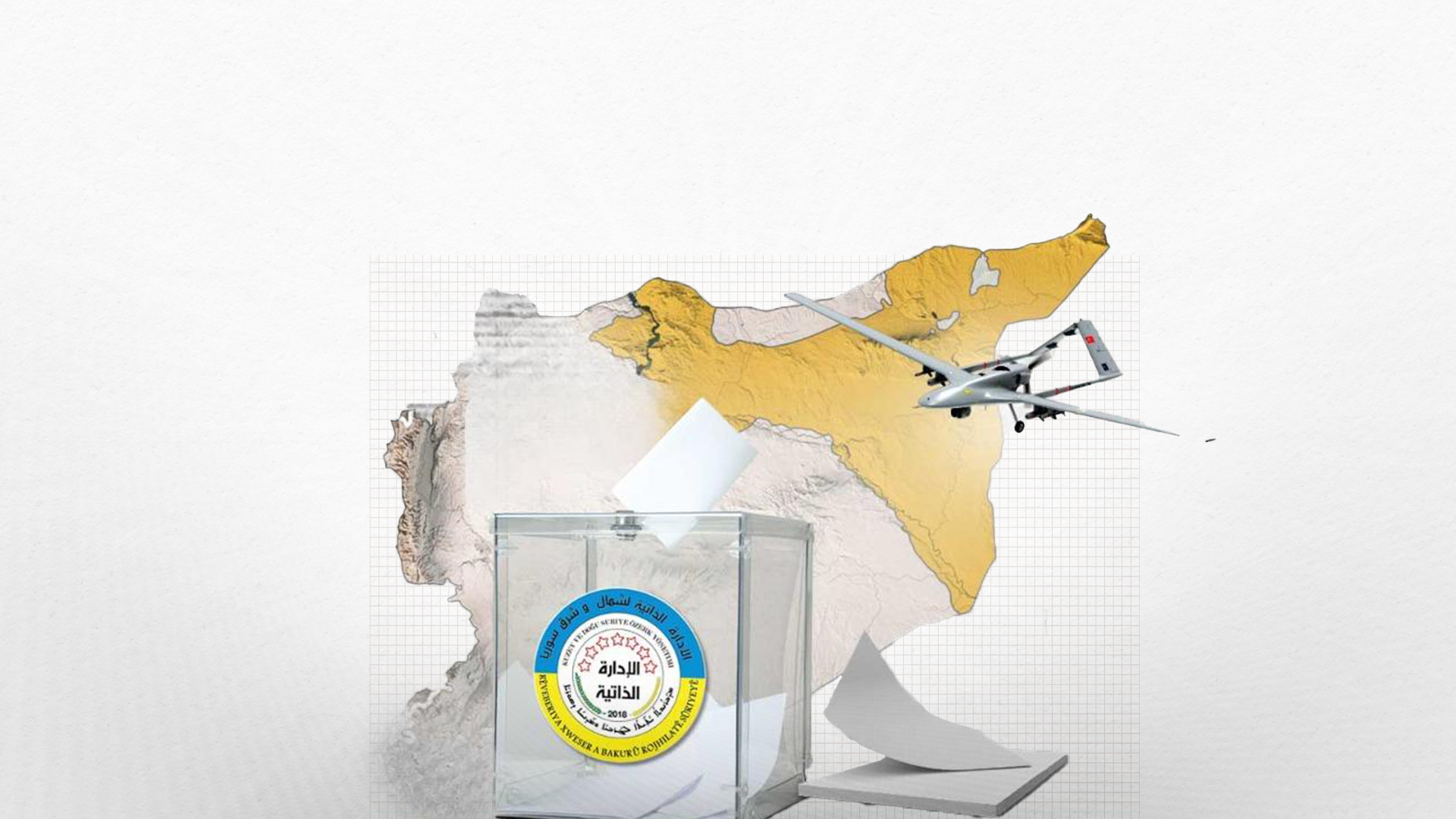
Turkish politicians hold varying views on the Autonomous Administration of North and East Syria (AANES), each shaped by perspectives on its identity and implications for Turkey. While government officials align with the state’s firm stance, labeling the AANES as an extension of the Kurdistan Workers’ Party (PKK), Kurdish politicians in Turkey often take pride in the AANES project emerging along Turkey’s southern border.
Turkey’s Official Stance: A Persistent Refusal
Under the leadership of the Justice and Development Party (AKP), Turkey’s government has consistently denied the legitimacy of the AANES, which it frames as a PKK-controlled territory. Official Turkish media reflect this narrative, portraying the administration as an arm of a hostile organization, banned for its armed struggle within Turkey.
At the heart of these differing opinions are questions about Turkey’s national security, the potential for diplomatic dialogue, and Turkey’s readiness to negotiate with the Syrian Democratic Forces (SDF). Former AKP parliamentarian Mehmet Metiner and People’s Democratic Party (HDP) parliamentarian Ahmet Turk shared their insights on these complex issues.
A U.S. Plot Against Turkey
Mehmet Metiner, a former AKP parliamentarian of Kurdish origin, views the AANES as a PKK proxy, bolstered by the U.S.-led Coalition against ISIS. Metiner perceives the PKK’s presence in Syria as part of an American agenda that also serves Israeli interests. He argues that the U.S. “uses the PKK as a military threat against Turkey to impose its designs and then presents itself as a mediator to remove that same threat.”
In Metiner’s view, U.S. support for the SDF—a coalition including the Kurdish People’s Protection Units (YPG)—enables a dangerous alliance that challenges Turkey’s security. He states, “The coalition aims to pressure Turkey into accepting a PKK-run administration in Syria under the guise of peace negotiations.”
Turkish Military Operations and PKK Allegations
Turkey has conducted multiple military operations targeting PKK and YPG strongholds, with the most recent involving Turkish-backed Syrian National Army forces. Turkey’s 2018 incursion led to the occupation of Afrin, while the 2019 campaign captured Ras al-Ain and Tel Abyad. Since then, Turkey has continued to carry out airstrikes on SDF-controlled areas.
Metiner dismisses claims that Turkey’s policies are anti-Kurdish, framing them instead as necessary defensive actions against “a hostile terrorist organization and the imperial powers backing it.” He stresses that “Erdogan’s Turkey and our AKP party have no issue with the Kurds of Syria or Kurds in general. The problem lies with the PKK and its supporters.”
Distinguishing Kurdish Groups: The HDP Perspective
In contrast to Metiner, HDP parliamentarian Ahmet Turk emphasizes the historical context of Kurdish marginalization in the region. He traces Kurdish repression back to treaties like Sykes-Picot, which partitioned Kurdish lands. Turk argues that Kurds in Syria merely seek the right to self-govern, noting, “Kurds in Syria gained a chance to govern themselves following the 2011 protests, which is a natural right for any people, as seen in many examples globally.”
Turk calls for a clear distinction between PKK-affiliated groups and the broader Kurdish community in Syria, arguing, “The military force in North and East Syria today is the SDF, not the PKK. This distinction must be understood.” He believes such differentiation could ease tensions and create opportunities for dialogue.
No Issue with Syrian Kurds
Metiner, however, insists that Turkey has no issue with Syrian Kurds and would not oppose a Kurdish administration within a Syrian constitutional framework, provided the PKK is excluded. “If a new Syrian constitution recognizes local Kurdish self-governance, Turkey would naturally accept it,” he explains.
However, Metiner underscores a key condition: “If the PKK maintains its armed presence, Turkey will not accept the administration there, even if it gains legal recognition.” He denies that the SDF is a legitimate Kurdish force, describing it as “the PKK’s armed forces, backed by the international coalition.”
The Kurdish Right to Self-Administration
Turk argues that the self-administration of Kurdish regions is a “natural right.” He points out that Kurdish groups in Syria, Iraq, and Turkey are increasingly focused on political goals rather than separatism. “Kurds are not seeking to break away; they want to be acknowledged and live in alignment with their cultural identity,” he explains.
Turk calls on Turkey to differentiate between political factions and armed groups within the Kurdish population. “Turkey knows that Kurdish political positions vary by country,” he says, adding that understanding these differences could improve Turkey’s approach.
Ongoing Challenges and Hopes for Dialogue
Both politicians agree that tensions in North and East Syria are unsustainable but offer differing solutions. While Turk believes that Turkey’s policies need a more nuanced approach, Metiner insists that any dialogue hinges on the PKK abandoning violence.
SDF Commander-in-Chief Mazloum Abdi, representing the Kurdish-led forces in Syria, frequently reiterates his willingness to engage with all parties, including Turkey. Abdi maintains that the SDF operates independently of the PKK and seeks stability within Syria’s borders.
Dialogue is Possible Without the U.S.
Metiner argues that Turkey can negotiate directly with Syrian Kurds, without the U.S. involvement. He asserts, “We don’t need the U.S. to mediate,” adding that the SDF’s formation was a product of PKK leader Abdullah Ocalan’s proposals, later adopted by the U.S.
For Metiner, Washington’s involvement complicates Turkey’s regional policies. He questions the Autonomous Administration’s legitimacy, saying, “Does this administration have any constitutional foundation? No. Turkey will never accept a U.S.-backed entity on its borders akin to a second Israel.”
Metiner concludes that a new, cooperative relationship with Syrian Kurds could emerge if Turkey’s security concerns were addressed through dialogue. He envisions a scenario where the Syrian government and Kurdish leaders could reach a mutual understanding, leading to a more stable future.
For his part, Turk advocates for open dialogue to resolve conflicts in Syria, emphasizing that Turkey and the Syrian regime should acknowledge the legitimacy of the SDF and the AANES. He argues that political authorities must prioritize the well-being of diverse communities over narrow political interests, noting that accepting the administration that protects millions in the region is essential for advancing peace and stability.