
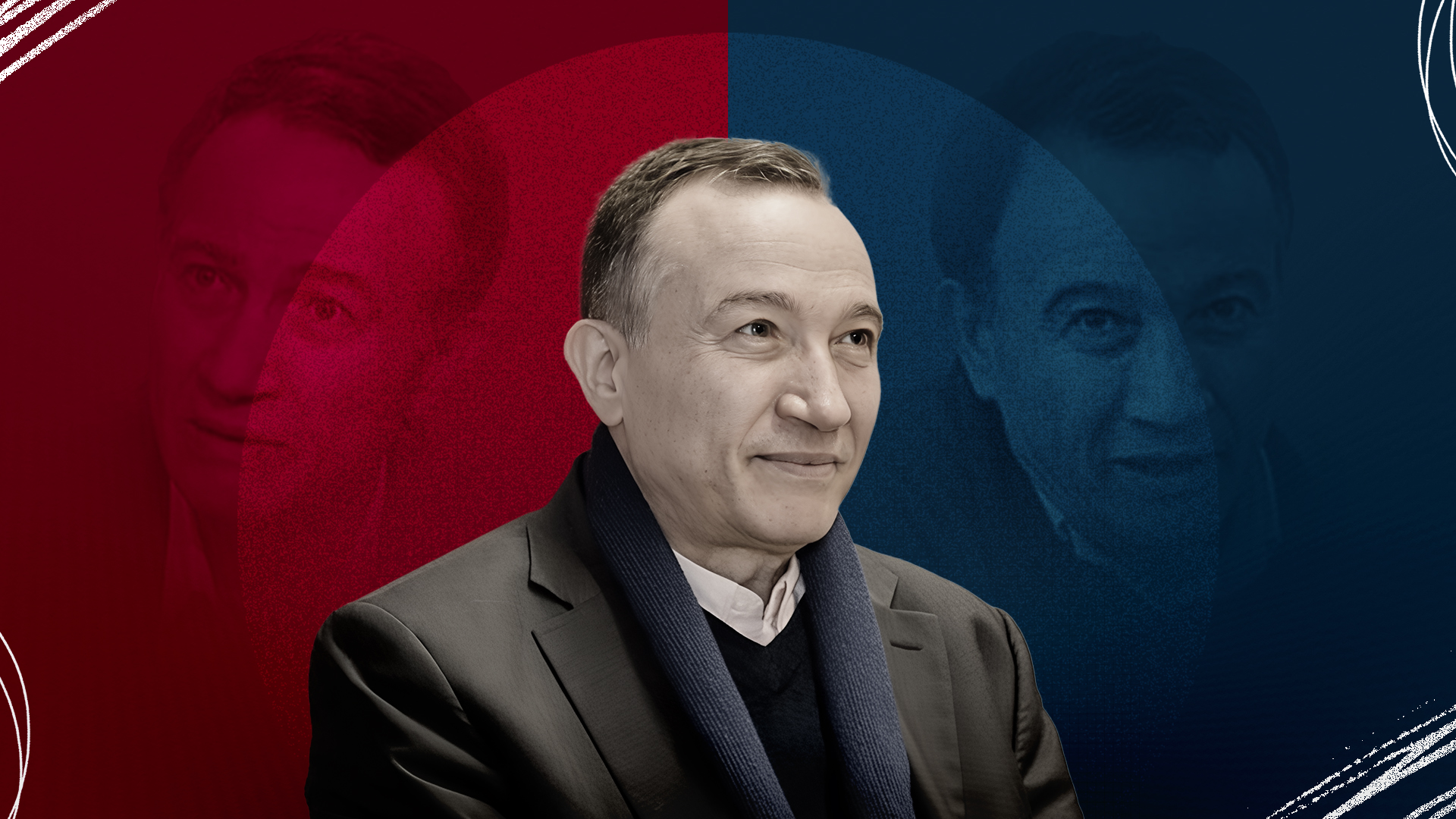
Haytham Manna, a prominent Syrian researcher and human rights advocate, has consistently taken a critical stance on the direction of Syria’s new leadership. His efforts are focused on forming a democratic and civil alliance capable of preventing any attempt to reestablish dictatorship. This mission aligns with his longstanding commitment to a state built on citizenship and human rights.
A well-known opponent of the Assad regime, Manna has warned against recent policies adopted by the new authorities. He has voiced strong opposition to appointing individuals responsible for war crimes to high-ranking military and governmental positions, as well as to the spread of hate speech and acts of violence along the Syrian coast.
Manna asserts, “Unless serious reviews are conducted today regarding all criminal decisions—through the formation of an inclusive national unity government with extensive powers, the establishment of a national Syrian army and police force, the abolition of all dictatorial decrees that monopolize decision-making, and the facilitation of a genuine national conference—we will inevitably face a brutal civil war and the grim prospects of partition and division.”
A Life of Activism and Resistance
Haytham Manna, originally Haytham al-Oudat, was born in Daraa countryside, southern Syria, in 1951. His father, prominent lawyer and opposition figure Yusuf Nasser al-Oudat, was imprisoned for 18 years by Syrian intelligence in two separate periods (1966–1967 and 1970–1986).
Even as a student, Manna was involved in activism. During his middle school years, he contributed to various magazines, including Al-Ta’awun with his friend Abdulaziz al-Khair and al-Musahib. He also co-founded student organizations and later, a human rights organization after finishing high school.
He pursued higher education at the University of Social Sciences and Medicine in Damascus, where he eventually earned a PhD in anthropology. His early life was marked by tragedy when his wife was murdered by her relatives just days after their wedding due to religious differences.
Throughout his academic years, Manna wrote extensively for Arab Studies and other publications, later publishing numerous books advocating for women’s rights, secularism, human rights, religious diversity, and Kurdish issues. His political journey included joining the Communist Action League in 1976, where he served on its political bureau before being forced to flee Syria in 1978 due to security persecution. He arrived in France in May of that year.
A Journey Through Political and Human Rights Activism
Manna remained a key figure in the opposition movement. In 1990, he co-founded the Committees for the Defense of Democratic Freedoms and Human Rights in Syria. Later, in 1998, he played a role in establishing the Arab Committee for Human Rights, serving as its spokesperson. This committee operated independently of political, ethnic, or religious affiliations, advocating for human rights and fundamental freedoms across the Arab world.
Over the years, he took on multiple responsibilities within various Arab and international NGOs, launching and supporting campaigns for the release of political prisoners across the region. His efforts earned him recognition, including an award from Human Rights Watch in 1992 and the Human Rights Medal from the National Academy of Sciences in Washington.
Even after Bashar al-Assad took power, Manna continued his activism. In 2005, he helped establish the Damascus Declaration for Democratic National Change but later withdrew. This initiative sought to replace Assad’s rule with a democratic system.
When the Syrian uprising began in 2011, Manna emerged as a key opposition figure. He co-founded the National Coordination Committee for Democratic Change, serving in its executive office and leading its foreign branch until his resignation in 2014. The following year, he launched the political movement Qamh and participated in the Cairo Conference, which led to the formation of the Cairo Opposition Platform. Later that year, he was elected president of the Syrian Democratic Council but resigned after a few months.
A Consistent Critical Voice
What sets Haytham Manna apart as a political dissident is his unwavering commitment to human rights and his critical thinking, regardless of the shifting political frameworks in which he has operated. He consistently rejects the notion that “the end justifies the means,” opposes deceit and false promises, and has firmly stood against foreign interventions and the militarization of the struggle against tyranny. These positions have made him a controversial figure among various opposition factions.
Unlike many opposition figures who adjusted their views after the change in leadership, Manna has remained steadfast in defending human rights and national causes. He was among the few voices to condemn the displacement of over 100,000 Kurds from northern Aleppo by Turkish-backed factions allied with Hayat Tahrir al-Sham during their offensive towards Aleppo in late November last year.
More recently, he has spoken out against the violations targeting Alawite communities on the Syrian coast since March 6, following clashes between Assad loyalists and security forces under the new government.
In a recent study on hate speech in Syria, Manna warned, “Promoting sectarian hate speech is not the beginning of a new Syria, but rather its demise. It is not a sign of salvation for Syrians but an indicator of their self-destruction.”
Reflecting on his experiences, he shared on social media: “I have lost more Alawite comrades than Sunni ones over the past fifty years of Assad’s tyranny.”