
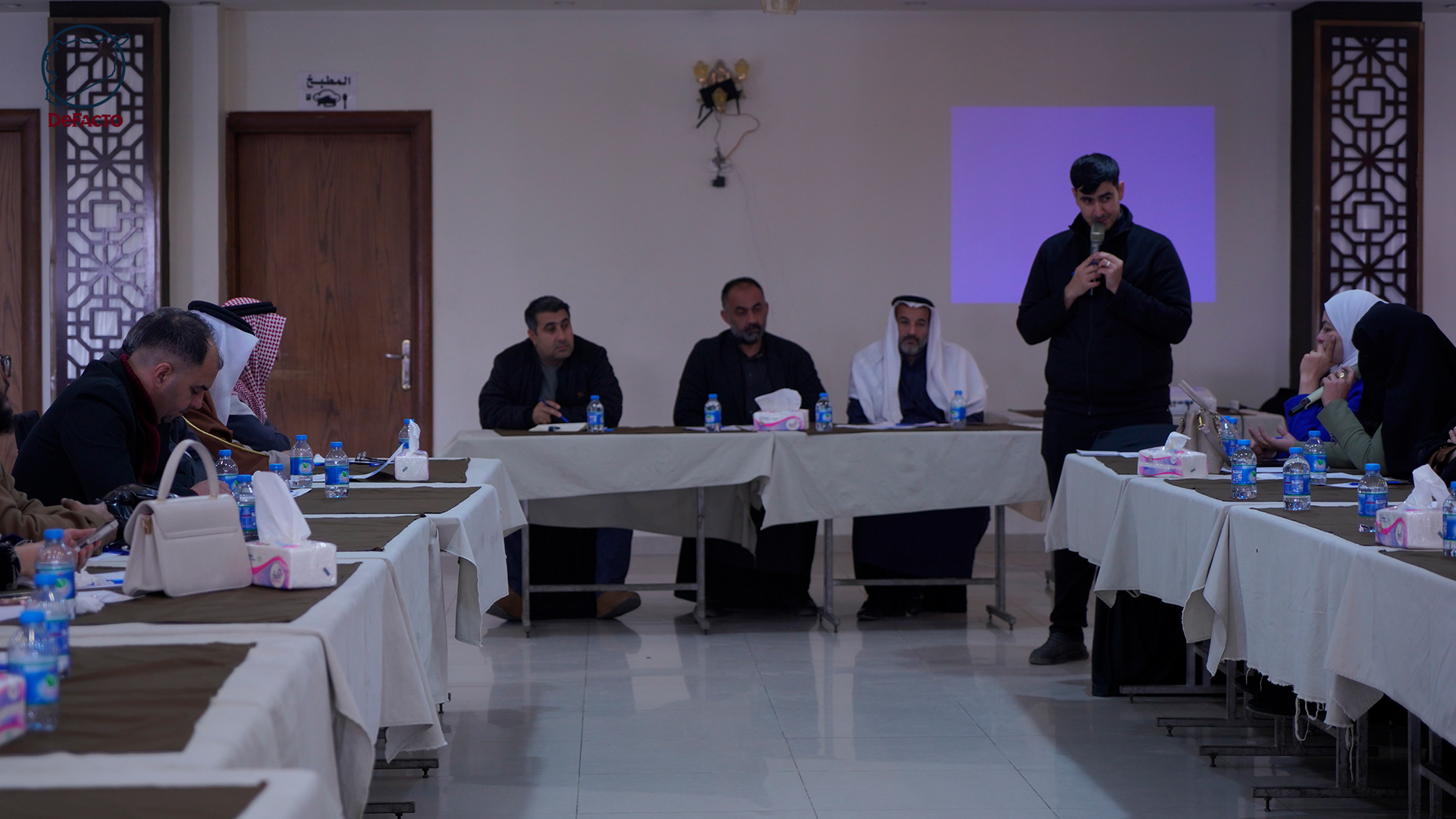
Amid the profound social and economic transformations shaping Raqqa in the aftermath of years of conflict, three civil society organizations convened a dialogue forum on February 9 under the title “Dialogue for Raqqa.” This initiative comes at a time when Syrian communities urgently need to foster communication and rebuild trust among diverse societal groups.
Organized by the DeFacto Dialogue platform, the Stability Support Center, and the Humanitarian and Development Cooperation Organization (HDC), the forum extended beyond community engagement, serving as a crucial starting point for reclaiming social identity and overcoming the lasting effects of conflict.
Promoting dialogue among different social groups is a fundamental step in the local community’s efforts to rebuild itself after prolonged instability. By providing a safe space for discussion, the forum empowered individuals to voice their opinions and concerns, ultimately strengthening trust and mutual understanding among all stakeholders.
The event served as a dynamic platform for exchanging ideas and perspectives, allowing participants to address shared challenges and explore viable solutions. This interaction not only enabled individuals to learn from each other’s experiences but also contributed to the development of effective strategies aimed at achieving sustainable development in the city.
Forum Recommendations
To address these challenges and foster a more inclusive and participatory environment, the forum proposed the following recommendations:
- Infrastructure Development: Improve public facilities and social centers to host dialogue events and community discussions.
- Formation of Local Committees: Establish inclusive committees representing diverse societal groups to facilitate participatory decision-making.
- Social Justice Enhancement: Ensure equal access to services and create new job opportunities to encourage civic engagement.
- Legal Reforms: Develop laws that safeguard citizens’ rights to participation and provide mechanisms to exercise them.
- Support for Civil Society Organizations: Empower civil society groups to act as intermediaries between the public and local authorities.
- Cultural and Artistic Activities: Organize cultural events to strengthen social bonds among different community groups.
- Interfaith and Cross-Cultural Dialogue: Promote platforms for discussions among religious and cultural groups to foster mutual understanding.
- Youth and Women’s Inclusion: Develop specialized programs to empower youth and women in leadership and decision-making roles.
- Capacity Building and Leadership Training: Offer training programs focused on leadership, social harmony, and effective governance.
- Educational Initiatives: Integrate civic education and community engagement principles into school curricula.
- Accessible Information: Enhance access to public information through digital platforms and media outlets.
- Media Transparency: Strengthen local media to represent community concerns fairly and increase transparency in policy decisions.
- Psychosocial Support: Provide mental health services for individuals affected by conflict to empower them for active participation.
Expert Engagement: Involve specialists from various fields in public discussions to provide informed solutions and conduct workshops on decision-making and governance.